Listen to this article read aloud.
Rome · Italy
Best Time to Visit Rome — Weather by Month
Rome is a year-round destination, but spring and fall usually offer the best balance of comfortable temperatures, outdoor sightseeing and manageable heat. Summer brings long days and a lively atmosphere, but July and August can be very hot. Winter is cooler and quieter, with fewer truly cold days than many northern European cities.
Updated October 2026 · Editor's Research Guide
Best for
History, food, art, architecture, couples & first-time Europe trips
Ideal trip length
4 to 6 nights
Planning example used on this site
7 days / 6 nights
Best time to visit
April through June and September through October
Known for
Colosseum, Roman Forum, Vatican Museums, Trevi Fountain, piazzas & pasta
Spring
Mild temperatures, blooming gardens and excellent walking weather
Summer
Long days, high visitor demand and the hottest temperatures of the year
Winter
Cooler temperatures, shorter days and good conditions for museums, churches and food-focused trips
Quick Answer: When Should You Go to Rome?
April through June and September through October are the strongest all-around periods for most travelers.
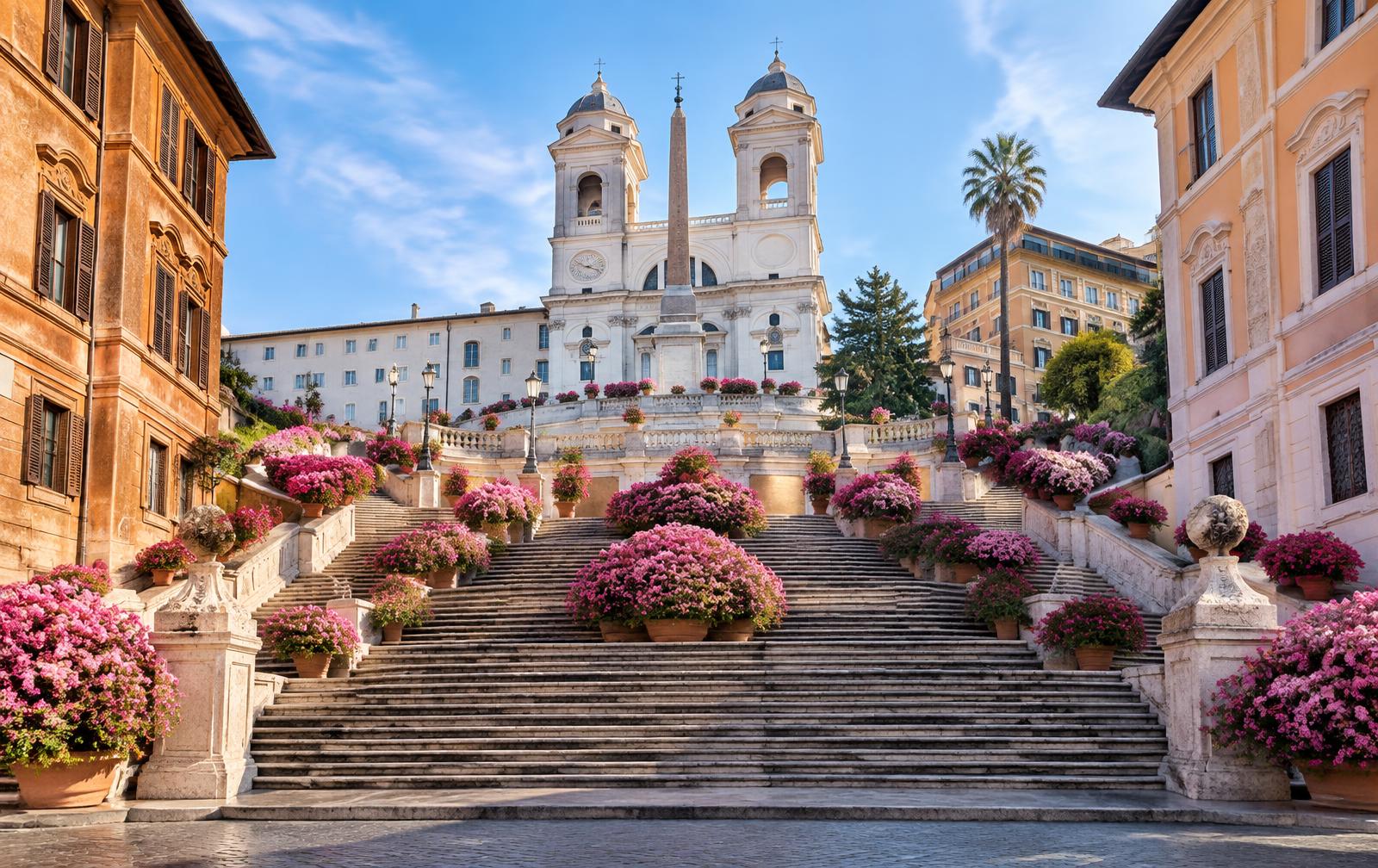
Spring offers mild temperatures, longer days and excellent conditions for walking between major sights. April and May also bring spring flowers and gardens, including Rome’s seasonal azalea display at the Spanish Steps and spring flowering at the city’s Rose Garden.
September and October are also excellent for outdoor sightseeing. Rome’s tourism office specifically highlights autumn as one of the best seasons, and October is traditionally known for especially pleasant, mild days sometimes referred to as the Roman “Ottobrata.”
July and August are the hottest months and can make long outdoor sightseeing days more tiring, especially at exposed archaeological sites. Travelers visiting between June and September should plan for stronger sun and hotter afternoons.
Winter can work well for travelers focused on museums, churches, food and lower-key sightseeing. Truly freezing weather is uncommon, though December and January are typically the coldest period.
Rome Weather by Month
January
Cool & quieter
Typical daytime feel: cool winter weather, often in the low-to-mid teens °C (50s °F), with colder mornings and evenings. Best for museums, churches, cafés and lower-key sightseeing.
February
Cool with some wetter periods
Temperatures remain mild compared with many European capitals, but rain is more common than in midsummer. Good for museums, food-focused trips and travelers who do not mind carrying a light rain layer.
March
Early spring transition
Days begin to feel noticeably milder and outdoor sightseeing becomes more comfortable. A useful shoulder-season month, though weather can still change quickly.
April
Mild & one of the best months
Pleasant walking weather, longer days and spring flowers make April one of Rome’s strongest sightseeing months. Great for the historic center, archaeological sites and gardens.
May
Warm & comfortable
Generally excellent weather for walking, outdoor dining and long sightseeing days. Visitor demand increases as summer approaches.
June
Warm & long days
Excellent for sightseeing early and late in the day, with hotter afternoons becoming more common. Sun protection becomes increasingly important.
July
Hot & busy
One of Rome’s hottest months, with stronger midday heat. Plan major outdoor attractions early in the morning, take breaks in the afternoon and carry water.
August
Very warm & summery
Heat can be intense, especially at exposed archaeological sites. Good for travelers comfortable with hot weather and slower midday sightseeing.
September
Warm & increasingly comfortable
Early September can still feel summery, while later in the month becomes excellent for walking and sightseeing. One of the strongest overall months.
October
Mild & atmospheric
Comfortable temperatures, softer light and excellent conditions for neighborhoods and outdoor sightseeing. One of Rome’s best months for a city trip.
November
Cooler & wetter
Rain becomes more common and days shorten. Better for travelers comfortable mixing indoor attractions with outdoor sightseeing.
December
Cool & festive
Cooler days and evenings, holiday atmosphere and fewer extremely hot or crowded sightseeing conditions. Good for museums, churches, shopping and seasonal city atmosphere.
Rome’s official tourism office describes the climate as generally mild throughout the year. July and August bring the strongest heat, while wetter conditions are more common in November and February.
High Season vs. Lower-Cost Periods
- Highest demand
- Late spring through summer, major holidays and popular event periods
- Best weather-to-crowds balance
- April through June and September through October
- Best value
- January, February and parts of November, outside major holidays and events
- Best for long outdoor sightseeing days
- April through June and September through October
- Best for travelers who enjoy hot weather
- July and August
- Best for spring gardens and flowers
- April and May
So, When Should You Go?
- For the best overall balance: April through June or September through October
- For warm weather and long days: June through September
- For fewer crowds and potentially lower hotel rates: January, February and parts of November
- For spring gardens and flowers: April and May
- For comfortable fall walking weather: September and October
- If you dislike strong heat: avoid making July and August your first choice