Listen to this article read aloud.
London · England, United Kingdom
Updated October 2026 · Editor's Research Guide
London at a Glance
London is one of the world's great cities for a first trip: compact enough to explore on foot in its central neighborhoods, yet large enough that planning your days by area saves real time. Centuries of history sit alongside world-class museums, royal parks, markets, theatres and a dining scene that spans every budget.
- Currency: British pound sterling (GBP, £)
- Language: English
- Time zone: GMT (BST in summer)
- Airports: Heathrow (LHR) is the main international gateway; Gatwick, Stansted, Luton and London City serve additional flights
- Getting around: the Tube, Elizabeth line, buses and walking cover almost everything a visitor needs
Best Areas to Stay
Where you stay shapes your trip more than almost any other decision. These neighborhoods put you close to the sights while keeping transport simple.
- Covent Garden — the most walkable base for first-timers, with theatres, restaurants and the West End on your doorstep
- Westminster and St James's — steps from Big Ben, Buckingham Palace and the Thames; quieter at night
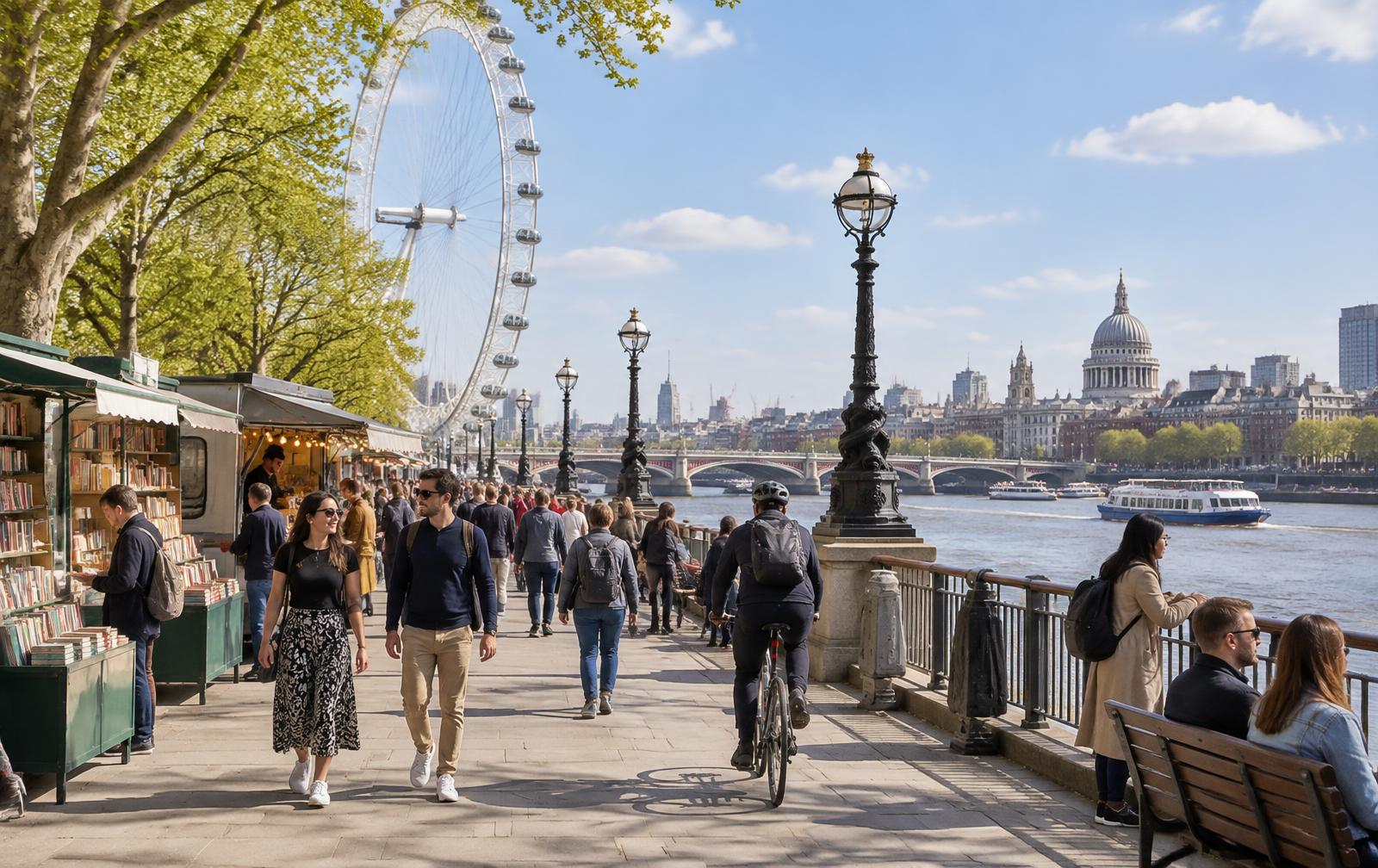
- South Bank — riverside walks, the London Eye and easy access to the Tate Modern and Borough Market
- Mayfair — elegant, central and polished, bordering Hyde Park and the shops of Bond Street
- Soho — lively day and night, ideal if dining and nightlife matter as much as sightseeing
- Kensington — museum district calm, with the V&A, Natural History Museum and Hyde Park nearby
Getting Around London
London's public transport is extensive, frequent and easy to pay for. You rarely need a car, and driving in central London is best avoided entirely.
- The Tube is the fastest way across the city; eleven lines connect every major sight and neighborhood
- The Elizabeth line links Heathrow, Paddington, the West End, the City and Canary Wharf with fast, spacious trains
- Buses are cheaper than the Tube and often the most scenic option — sit upstairs on a central route for a free sightseeing tour
- Walking is genuinely practical: Covent Garden to Westminster, or South Kensington to Hyde Park, are pleasant 20–30 minute strolls
- Pay with a contactless bank card or phone, or an Oyster card — both give the same fares and daily caps, so you never need to buy individual tickets
- River buses on the Thames are a relaxed way to reach Greenwich or Battersea
How Many Days You Need
Three days covers the greatest hits at a brisk pace. Five days lets you add museums, markets and a neighborhood or two at a relaxed rhythm. A full week — the 7-day / 6-night trip we use for planning on this site — is ideal: it leaves room for a day trip, unhurried museum mornings and evenings in the West End without feeling rushed.
Sample 7-Day / 6-Night London Itinerary
This plan groups nearby attractions together, so you spend your days exploring rather than crossing the city.
Day 1 — Westminster and the South Bank
Start with the icons: Big Ben and the Houses of Parliament, Westminster Abbey, then walk across Westminster Bridge to the London Eye and the South Bank riverside. End with dinner around the Southbank Centre or a short ride to Covent Garden.
Day 2 — Buckingham Palace, St James's and Mayfair
See Buckingham Palace and, if timed right, the Changing of the Guard. Stroll through St James's Park, then into Mayfair for lunch and an afternoon on Bond Street or at the Royal Academy.
Day 3 — The City: Tower of London and Tower Bridge
Give the morning to the Tower of London — arrive at opening to beat the crowds — then walk across Tower Bridge and along the river to Borough Market for lunch. St. Paul's Cathedral is a short walk or one Tube stop away.
Day 4 — Museums in South Kensington
Pick one or two of the great free museums: the V&A, the Natural History Museum or the Science Museum sit side by side. Spend the late afternoon in Hyde Park and Kensington Gardens, with Kensington Palace at the western end.
Day 5 — The British Museum, Covent Garden and Soho
Morning at the British Museum, then walk south into Covent Garden for the market, street performers and lunch. Spend the evening in Soho — dinner, then a West End show if you've booked ahead.
Day 6 — Day trip
Choose one easy escape: Windsor Castle (about an hour by train), Greenwich by river boat, or Hampton Court Palace. All are simple, rewarding and back in time for dinner in London.
Day 7 — Markets and a final neighborhood
Keep the last day flexible: Portobello Road on a Saturday, Camden Market, or a final wander through Notting Hill and a long pub lunch before an evening departure.
Best Things to Do
London's highlights reward a little planning: book timed entry for the Tower of London, Westminster Abbey and the London Eye, and leave the free museums flexible for quieter weekday mornings.
- Tower of London — nearly 1,000 years of history and the Crown Jewels
- Buckingham Palace and the Changing of the Guard
- Westminster Abbey — coronation church of English monarchs
- Big Ben and the Houses of Parliament
- British Museum — free, vast and endlessly rewarding
- London Eye — the classic skyline view
- St. Paul's Cathedral — climb the dome for one of the city's best views
- Tower Bridge — walk the high-level glass-floor walkways
- Covent Garden — shopping, dining and street theatre
- Hyde Park — 350 acres of green in the heart of the city
See our full Top 10 Things to Do in London
Food and Dining
London eats well at every price level. Borough Market and the city's food halls are ideal for casual lunches; pub classics — a Sunday roast, fish and chips — are part of the experience; and the West End, Soho and Mayfair hold everything from affordable set menus to some of the world's most celebrated restaurants. Book popular restaurants ahead, especially for Friday and Saturday evenings.
Shopping
Oxford Street and Regent Street cover the big names; Bond Street and Mayfair the luxury houses; Covent Garden and Seven Dials the independents. For something more personal, try the markets — Portobello Road, Camden, Spitalfields and Borough — or the grand department stores: Harrods, Selfridges and Liberty.
Day Trips from London
- Windsor Castle — the easiest royal day trip, under an hour by train
- Greenwich — maritime history, the Prime Meridian and a beautiful park; go by river boat
- Hampton Court Palace — Henry VIII's riverside palace and maze
- Oxford or Cambridge — university cities about an hour by train
- Stonehenge and Bath — a longer day, best as an organized tour or early train
Money and Payments
London is close to cashless. Contactless cards and phone payments are accepted almost everywhere — on the Tube, buses, in shops, markets, pubs and taxis. Carry a small amount of cash for the odd market stall or tip, but you can comfortably go days without using it. ATMs are widespread, and paying in pounds (rather than accepting a card terminal's currency conversion) usually gives the better rate.
Tipping and Service Charges
Many restaurants add an optional service charge of around 12.5% to the bill — check before adding anything extra. Where no service charge is included, 10–12.5% is customary for good table service. Tipping in pubs is not expected, taxi drivers appreciate rounding up, and hotel porters a pound or two per bag.
Weather and What to Pack
London's weather is mild but changeable in every season. Pack layers you can add or remove, a compact umbrella or light rain jacket whatever the month, and comfortable walking shoes — you will walk more than you expect. Summers are warm rather than hot; winters are cool and damp rather than freezing.
Safety and Practical Tips
- London is generally safe for visitors; use normal city awareness, especially in crowded tourist areas and on busy transport
- Keep phones and wallets secure in crowds around major sights and markets
- Stand on the right on escalators — a small thing Londoners genuinely appreciate
- Book popular attractions, West End shows and well-known restaurants in advance
- Pharmacies (look for Boots or Superdrug) handle minor ailments; the emergency number is 999
- Most museums are free, but a few special exhibitions and major attractions charge — check before you go